

Your shoulder moves in more directions than almost any other joint, letting you reach overhead, throw a ball, or swing a racket. However, that incredible flexibility comes with a trade-off: when the shoulder takes a hard hit, things can break. Glenoid fractures involve a break in the socket portion of your shoulder’s ball-and-socket joint. Although less common than many other shoulder fractures, glenoid fractures can affect shoulder function and stability. Understanding what they are, how they happen, and what your options might look like is an important first step toward getting the right care for your specific situation.
Key Takeaways
- Glenoid fractures are typically associated with high-energy trauma, such as falls, car accidents, or shoulder dislocations.
- Symptoms may include pain, swelling, difficulty moving the arm, and a feeling that the shoulder is unstable.
- Not all glenoid fractures require surgery. Treatment depends on fracture severity, displacement of the fracture fragments, and your individual health needs.
What Is the Glenoid?
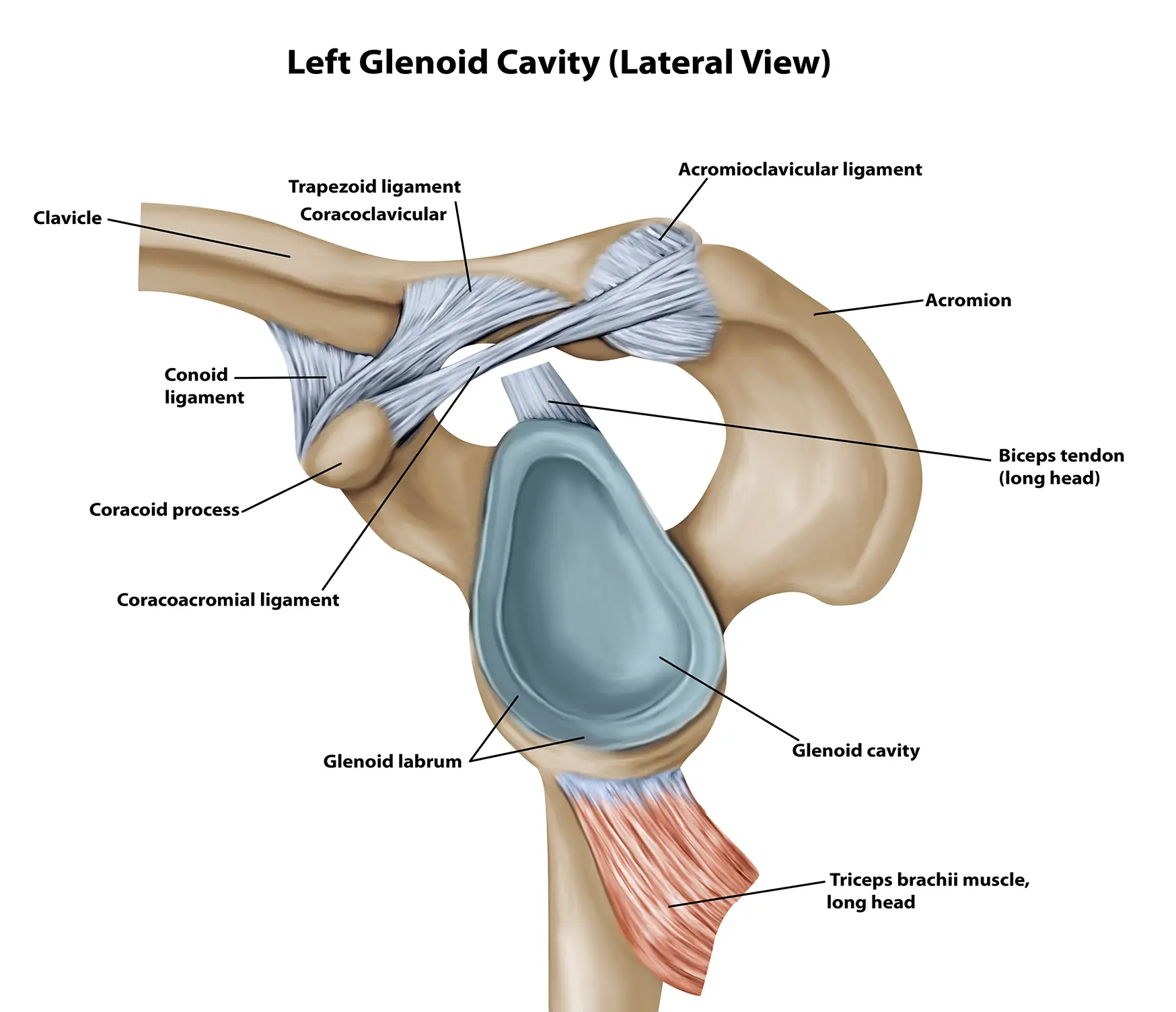
The shoulder is made up of three bones: the humerus (upper arm bone), the clavicle (collarbone), and the scapula (shoulder blade). The glenoid is part of the scapula. It forms a shallow, cup-shaped socket that helps support the rounded head of the humerus.
Think of it like a golf ball resting on a tee. The ball (the head of the humerus) sits in the shallow cup (the glenoid), and a ring of cartilage called the labrum deepens the socket and helps keep everything in place. Surrounding muscles, tendons, and ligaments all work together to keep the joint stable while allowing it to move through an impressive range of motion. When the glenoid fractures, the stability of the shoulder joint can be affected, which is why these injuries require careful evaluation.
How Do Glenoid Fractures Happen?
Glenoid fractures are typically the result of force applied to the shoulder. Compared to other types of shoulder fractures, they are considered relatively uncommon. When they do occur, they are frequently associated with higher-energy injuries.
Some of the more common causes include:
- High-energy trauma, such as motor vehicle accidents or motorcycle crashes
- Hard falls onto an outstretched hand or directly onto the shoulder
- Direct blows to the shoulder during contact sports or other high-impact activities
- Shoulder dislocations, where the humeral head forces its way out of the socket and can chip or fracture the glenoid rim in the process
Glenoid rim fractures, where a piece of the socket’s edge breaks off, are more commonly linked to shoulder dislocations. Larger, more complex fractures involving the main surface of the socket tend to result from higher-energy impacts. Certain individuals may face a higher risk, including athletes involved in contact or collision sports, cyclists and motorcyclists, and older adults whose reduced bone density may increase fracture risk even after lower-energy falls.
Types of Glenoid Fractures
Not all glenoid fractures are the same, and the type of fracture matters a great deal when it comes to planning treatment. In general, glenoid fractures fall into two broad categories.
Glenoid Rim Fractures
These involve a break at the edge of the socket. A small rim fracture, often called a bony Bankart lesion, commonly occurs after shoulder dislocations. The size of the fragment matters significantly. Larger pieces involving a meaningful portion of the socket surface tend to affect shoulder stability more than smaller chips, and they may require different treatment considerations.
Glenoid Fossa Fractures
These involve a break through the body of the socket itself. They can be simple linear cracks or more complex injuries with multiple fragments. They are more commonly associated with high-energy trauma and may involve surrounding parts of the scapula as well.
Another key distinction is whether a fracture is non-displaced (bone fragments remain close to their original position) or displaced (the pieces have shifted out of alignment). This distinction plays a role in determining whether surgery may be appropriate.
Recognizing the Symptoms
Glenoid fractures can produce a range of symptoms, and what patients experience often depends on the severity of the injury and whether other structures were also affected. Not every case looks or feels the same. Common symptoms may include:
- Pain in and around the shoulder, especially with movement
- Swelling and bruising around the joint
- A sensation that the shoulder feels unstable or is “giving way”
- Difficulty lifting, reaching, or rotating the arm
- A grinding or catching feeling inside the joint in some cases
- Numbness or tingling if nearby nerves were affected during the injury
It is worth noting that glenoid fractures frequently occur alongside other shoulder injuries. Symptoms alone do not always reveal the full picture, which makes a thorough evaluation by an experienced shoulder specialist especially important.
Getting a Diagnosis
When a glenoid fracture is suspected, the diagnostic process typically begins with a detailed conversation about what happened, when it happened, and what you are feeling. A physical examination follows to assess pain, range of motion, strength, and any signs of instability.
Imaging studies then help clarify what is going on inside the joint. X-rays are usually the starting point and can reveal many fractures. However, the glenoid’s position within the shoulder can sometimes make certain breaks difficult to see on standard films alone. Because of this, a CT scan is frequently recommended for a more complete picture. CT imaging provides detailed three-dimensional views of the bone and can help determine how much of the glenoid is involved, how displaced the fragments are, and whether bone loss is present.
MRI may also be ordered when there is concern about soft tissue injuries alongside the fracture, such as tears to the labrum, rotator cuff, or surrounding ligaments. Getting a complete picture of the injury allows a specialist to build the most appropriate plan for your care.
Treatment Options: It Is Highly Individual
There is no single treatment approach that applies to every glenoid fracture. The right plan depends on the type and location of the fracture, how much displacement or bone loss is present, your age, activity level, and overall health, and whether other shoulder structures were also injured. What works well for one patient may not be the best fit for another, which is why a personalized evaluation matters.
Non-Surgical Treatment
Some glenoid fractures, particularly those that are non-displaced, may be treated without surgery. Non-surgical care focuses on protecting the shoulder while bone heals naturally. This approach may include:
- Wearing a sling or shoulder immobilizer to limit movement and support the arm during the early healing phase
- Restricting bearing weight through the arm and shoulder
- Managing pain with medication as directed by your doctor
- Beginning gentle physical therapy once healing is progressing well, gradually restoring range of motion in a supervised, controlled way
- Regular follow-up appointments and imaging to monitor healing progress
The goal is to protect the healing tissue while avoiding prolonged immobility that can lead to stiffness and muscle loss.
Surgical Treatment
Surgery may be recommended when a fracture involves a larger portion of the glenoid surface, when bone fragments are significantly displaced, or when shoulder instability is present. In active individuals and athletes, surgery may also be considered to restore the joint surface more precisely, minimize further instability, and support a return to higher levels of function.
Surgical options vary depending on the fracture pattern. In many cases, surgeons use screws, plates, or other fixation devices to reposition and stabilize the fractured bone fragment. Sometimes it is possible to perform this surgery arthroscopically. When the injury involves significant bone loss, a bone grafting procedure may be considered to reconstruct the socket. In rare or complex situations, such as when significant joint damage or post-traumatic arthritis develops, shoulder replacement surgery may be considered.
Summary
Glenoid fractures range from small rim fractures linked to shoulder dislocations to complex, high-energy injuries involving multiple bone fragments within the socket. Diagnosis usually requires imaging, and treatment, whether surgical or non-surgical, is shaped by the individual patient’s fracture pattern, health status, and goals.
Frequently Asked Questions
How common are glenoid fractures compared to other shoulder fractures?
Glenoid fractures are considered relatively uncommon. They represent a small fraction of all shoulder fractures and are most frequently seen following high-energy trauma or shoulder dislocation.
Can a glenoid fracture heal without surgery?
Some glenoid fractures, particularly those that are non-displaced, may heal well with non-surgical management. Whether surgery is appropriate depends on multiple factors, including the size and position of the fracture, the degree of shoulder instability, and your activity level.
How long does recovery from a glenoid fracture typically take?
Recovery timelines vary considerably from patient to patient. Less severe fractures managed non-surgically may see meaningful improvement within a few months. More complex cases treated surgically may require six months to a year or more before a full return to demanding activities. Your care team can offer a more individualized timeline based on your injury and progress.