

Medically reviewed by John Costouros, MD | Reviewed May 2026
Of all the conversations I have with shoulder patients, those about irreparable rotator cuff tears often start in the same place. A patient has been managing pain for months, sometimes years, hoping things would turn around. They come in, and they hear the word “irreparable.” What I want them to understand right away is that irreparable doesn’t mean untreatable. There are more options available now than most patients realize. In this post, I’ll walk you through what irreparable rotator cuff tears are, why they happen, and the range of approaches that may still be available to you here in the Bay Area and beyond.
Key Takeaways
- An irreparable rotator cuff tear is one where the tendon cannot be reattached to the bone in a way that allows reliable healing, often due to retraction, muscle changes, or poor tissue quality.
- Not every patient with an irreparable tear needs surgery. In some cases, non-surgical management may provide acceptable improvement.
- Surgical options range from joint-preserving procedures to reverse shoulder replacement, and the right choice depends on factors such as age, activity level, joint condition, and personal goals.
What Is an Irreparable Rotator Cuff Tear?
The rotator cuff is a group of four muscles and their tendons that surround the shoulder joint. Together, they keep the ball of the upper arm bone (the humerus) centered in the shallow socket of the shoulder blade while letting the arm lift, rotate, and reach in nearly any direction. The four muscles include the supraspinatus, infraspinatus, teres minor, and subscapularis.
A rotator cuff tear happens when one or more of these tendons pulls away from the bone or develops a hole through the tendon itself. Many tears can be repaired surgically, especially when caught early. An irreparable rotator cuff tear is different. It generally means the tendon cannot be repaired to the bone in a manner that is expected to heal reliably.
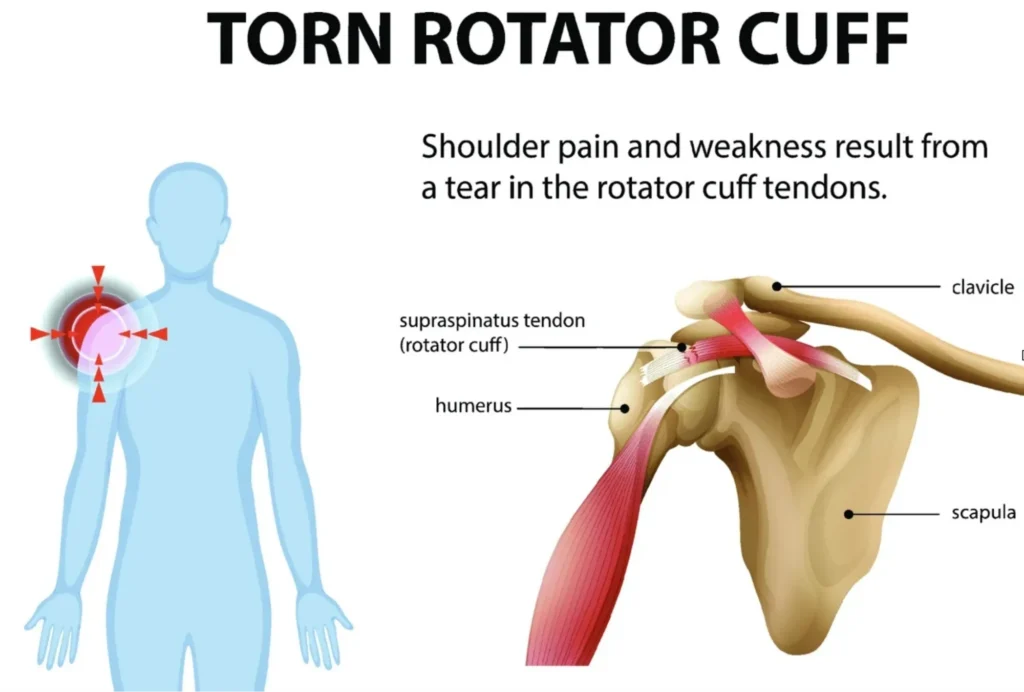
That distinction matters, but it does not mean nothing can be done. It means standard repair surgery may not be the right fit, and we need to consider alternative approaches that are tailored to your situation.
What Makes a Rotator Cuff Tear “Irreparable”?
Several factors can move a tear into irreparable territory. In my experience, no single feature alone defines irreparability. We typically look at the full picture before making that determination.
Common factors may include:
- Tendon retraction. Over time, a torn tendon can pull back from the bone like a stretched rubber band that has been cut. The further it retracts, the harder it can be to bring the tissue back to its attachment site without too much tension.
- Muscle atrophy and fatty infiltration. When a tendon has been torn for a long time, the muscle attached to it may shrink and become infiltrated with fatty tissue. This change can weaken the muscle’s ability to function even if the tendon were reattached. The process cannot be reversed but following repair this process does not progress further.
- Poor tissue quality. Some tears involve tendon tissue that has thinned, frayed, or degenerated to the point where sutures may not hold reliably.
- Tear size and pattern. Massive tears that involve multiple tendons and can be more difficult to repair.
- Time since the tear occurred. Tears that have been present for many years, especially without treatment, are more likely to develop the changes that make repair difficult.
These factors often appear together. A tear that has been present for years tends to retract more, and the surrounding muscle tends to atrophy as a result. That is one of the reasons that I encourage patients with persistent shoulder pain to seek an evaluation rather than waiting. Earlier care may keep more options open.
Symptoms and Impact on Daily Life
Patients with irreparable rotator cuff tears often share similar experiences. Pain is usually a major complaint, and it tends to be especially noticeable at night. Many tell me they can no longer sleep on the affected side. Some find sleep difficult in any position.
Beyond pain, weakness can become a significant issue. Lifting the arm overhead, reaching into a cabinet, playing overhead sports or during exercise, or simply carrying a bag of groceries can feel difficult or even impossible. Some patients describe a sensation that the arm just will not cooperate, even when they try to use full strength. Others develop a noticeable change in how they hold or move the affected arm. In more advanced cases, a condition called rotator cuff arthropathy may develop, in which long-standing rotator cuff dysfunction leads to loss of cartilage, arthritis, and additional changes in the joint surface itself including bone loss.
How Are Irreparable Rotator Cuff Tears Diagnosed?
Diagnosis usually begins with a careful conversation about your symptoms, your history, and what you have already tried. I want to understand how the pain affects your daily life and which activities have become limited. A physical examination follows. I assess range of motion, strength in different positions, and signs that suggest a particular tendon may be involved.
Imaging plays an important role. X-rays may reveal changes in the position of the humerus relative to the socket, which can suggest long-standing rotator cuff dysfunction. They can also show signs of arthritis or bone spurs. With an MRI, we can typically see the tear pattern, the degree of tendon retraction, and the condition of the muscles, including any fatty infiltration. Together, these studies can help determine whether a tear is truly irreparable and what options may be most appropriate for you.
Treatment Options: An Individualized Approach
There is no single best treatment for an irreparable rotator cuff tear. The right approach depends on your age, activity level, pain, functional limitations, and the condition of the surrounding joint. Some patients experience improvement with non-surgical care alone, while others benefit from one of several surgical options. My goal is always to walk through each option carefully so we can choose the plan that fits your life.
Non-Surgical Management
Many patients with irreparable rotator cuff tears can achieve acceptable improvement without surgery. Non-surgical management focuses on reducing pain, improving function, and helping the surrounding muscles compensate for the missing rotator cuff function but weakness involving the specific tendons and muscles involved will persist.
This approach may include:
- A targeted physical therapy program designed to strengthen the deltoid and the muscles around the shoulder blade, which can help offload the damaged rotator cuff
- Anti-inflammatory medications to manage pain and swelling
- Activity modifications that reduce strain on the shoulder while preserving as much function as possible
- Injections in select cases to help calm inflammation, although these are not intended for long-term use
For many older patients with lower physical demands, a well-designed therapy program may provide enough relief to delay or avoid surgery entirely. Some patients are surprised at how much function they can regain when the right muscles are trained to take on more of the work.
Partial Repair and Arthroscopic Debridement
In some cases, even when a complete repair is not possible, a partial repair may still be helpful. During this approach, the tendon is brought as close to the bone as it can reasonably reach and secured. The repair may not restore the original anatomy, but it can sometimes reduce pain and improve function. Arthroscopic debridement is another option that may be considered. This minimally invasive procedure involves cleaning out inflamed tissue, removing bone spurs, and addressing other sources of pain inside the joint. It does not repair the rotator cuff, but it may help relieve symptoms in carefully selected patients.
Tendon Transfer Procedures
Tendon transfer procedures may be an option for some patients, particularly individuals who still have well-preserved cartilage in the shoulder joint. In these procedures, a nearby healthy muscle and its tendon are moved to take over some of the work of the torn rotator cuff. The choice of which tendon to transfer depends on which part of the rotator cuff is affected. These are technically demanding procedures, and patient selection matters greatly. Tendon transfers may not be the right fit for everyone, but in the right candidate, they may help restore strength and meaningful function.
Subacromial Balloon Spacer
The subacromial balloon spacer is a minimally invasive option. I was one of the first to explore this treatment following FDA approval in the United States. During this arthroscopic procedure, a small biodegradable, saline-filled balloon is inserted above the rotator cuff and inflated to create a cushion. This helps position the upper arm bone more effectively against the shoulder blade, allowing the intact surrounding muscles to function better, reducing pain, and improving range of motion. For patients who meet certain criteria for this procedure, recovery tends to be faster than more invasive surgical options. I offer the subacromial balloon spacer option and have performed approximately 100 of these procedures. Good candidates are those with an intact subscapularis tendon and minimal arthritis.
Reverse Shoulder Replacement
For patients with irreparable rotator cuff tears who also have significant pain, weakness, and changes in the joint, reverse shoulder replacement has become an increasingly important and durable option. In this procedure, the normal anatomy of the ball-and-socket joint is reversed: a metal ball is fixed to the shoulder blade side, and a socket is attached to the top of the upper arm bone.
This redesign shifts the mechanics of the joint so the deltoid muscle can take over the work of lifting the arm, even when the rotator cuff is no longer functional. It is one of the most reliable options for restoring overhead function in patients with massive irreparable tears, especially when arthritis has developed alongside the tear. I was one of the first surgeons in the United States to bring reverse total shoulder replacement to my patients after it became FDA-approved in 2004, and I have seen firsthand how it has changed outcomes for people who once had very few options.
Summary
Many patients with irreparable rotator cuff tears can find meaningful relief through a thoughtful, personalized treatment plan. Options range from focused physical therapy and pain management to joint-preserving surgical procedures and, when appropriate, reverse shoulder replacement. The right path depends on a careful look at your anatomy, your goals, and your overall health. If you have been told you have an irreparable rotator cuff tear, an evaluation with an experienced shoulder specialist can help clarify what may be possible for you.
Frequently Asked Questions
Can an irreparable rotator cuff tear heal on its own?
A complete rotator cuff tear cannot heal back to the bone on its own. However, many patients are able to manage their symptoms and improve their function to a degree through a combination of physical therapy, activity modification, and other non-surgical measures.
How do I know if my rotator cuff tear is irreparable?
That determination usually requires an MRI along with a careful clinical examination. Factors such as tendon retraction, the size and pattern of the tear, the degree of muscle atrophy, and how long the tear has been present all play a role.
How long does recovery take after surgery for an irreparable rotator cuff tear?
Recovery timelines depend heavily on which procedure is performed. Arthroscopic repair and other joint-preserving procedures such as tendon transfers may require four to six months of dedicated rehabilitation. Newer procedures such as the subacromial balloon allow for more rapid recovery. After reverse shoulder replacement, substantial recovery often occurs during the first several months, with continued improvements in strength and motion possible for a year or longer. Your care team can give you a more individualized timeline based on your specific procedure and goals.