

One of the most common questions I hear from patients after we’ve decided to move forward with rotator cuff surgery is: “What does recovery actually look like?” Rotator cuff surgery recovery is a commitment. In my experience treating shoulder conditions, I’ve found that patients who understand the recovery process may find it easier to stay engaged and follow the rehabilitation plan. Knowing what’s coming helps you stay patient, set realistic expectations, and commit fully to rehabilitation.
Key Takeaways
- The recovery following rotator cuff surgery varies depending on the complexity of the tear, tear size, individual factors, and the technique used. Not all repairs are created equal and sometimes the ultimate decision on the technique used, postoperative restrictions, and duration of sling use can vary.
- For most repairs, the sling is used for the first 4-6 weeks following surgery and lifting restrictions can continue for up to 4 months following surgery.
- The majority of a patient’s recovery occurs during the first 4 months following surgery, but range of motion and additional gains in strength and endurance can sometimes occur for up to 2 years following surgery.
- The early weeks focus on protecting the healing tendon. Skipping ahead or pushing too hard during this phase can put the repair at risk.
- Every patient’s timeline is different. Your care team will tailor the pace of recovery to your specific injury and goals.
A Quick Note on What We’re Repairing
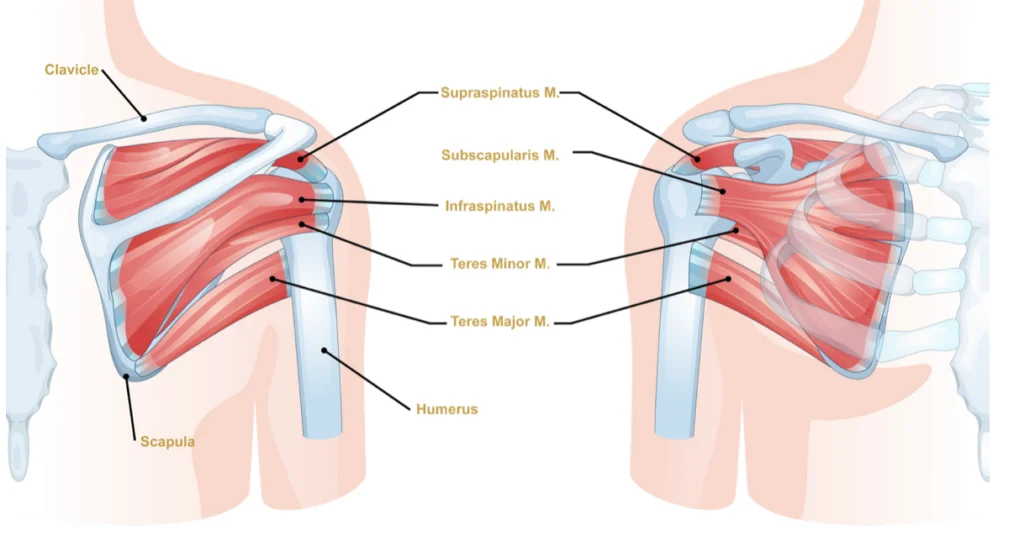
Before diving into the timeline, it helps to understand what’s happening inside the shoulder. The rotator cuff is a group of four muscles (the supraspinatus, infraspinatus, teres minor, and subscapularis), along with their tendons. These tendons attach your upper arm bone to your shoulder blade, and they work together to keep the shoulder stable while allowing it to move through a wide range of motion.
When a tendon tears and surgery becomes necessary, the goal is to reattach that tendon back to the bone where it belongs. The tendon-to-bone healing process is gradual. It takes time for the tissue to truly integrate and strengthen. That biology drives every phase of the recovery timeline.
Weeks 1–2: Protection Is the Priority
The first two weeks after rotator cuff surgery are largely about protecting the site. Your arm will be in a sling, which serves an important purpose: it limits movement that could stress the healing repair before the tissue has had any chance to begin knitting back together.
During this phase, pain and swelling are expected. Using your pain medications as directed, applying ice regularly, and keeping the arm elevated when possible can all help manage discomfort. Many patients also find it helpful to sleep in a reclined position, such as in a recliner or propped up with pillows, since lying flat can increase shoulder pressure and disrupt sleep.
Your physical therapist usually begins very gentle passive range-of-motion exercises. “Passive” means they move your arm for you; your shoulder muscles are not doing any active work. These early movements help prevent stiffness and reduce scar tissue formation, without placing direct load on the repair.
A few general guidelines during this phase:
- Keep the surgical incision clean and dry, following my wound care instructions closely.
- No reaching, lifting, or rotating the arm independently.
- Attend all physical therapy and follow-up appointments so your care team can monitor early healing. Make sure you are also doing your home exercises that are prescribed by your surgeon and followed by your physical therapist.
Weeks 3–6: Early Progress
I will guide you on when you may stop using the sling based on what was found and repaired during your procedure. Larger tears may require a longer immobilization period or a delay in starting physical therapy.
Passive range-of-motion exercises typically continue and may expand slightly, allowing your shoulder to move through a greater arc under the guidance of your physical therapist. Some patients also begin gentle elbow, wrist, and hand movements to prevent stiffness in those areas.
Swelling usually begins to settle during this window, and many patients notice a gradual improvement in pain levels. That said, some discomfort is still entirely normal, and you shouldn’t interpret lingering soreness as a sign that something has gone wrong.
Weeks 6–12: Transitioning to Active Movement
Around the six-week mark, many patients begin moving into a more active phase of rehabilitation. This is typically an exciting milestone, and one that patients tend to look forward to. You may be guided from passive exercises into active-assisted movement, meaning you begin using your own shoulder muscles, but with support.
Over the following weeks, active range of motion gradually increases. You start moving the arm on your own, within prescribed limits. Exercises may include gentle pendulum swings, forward elevation with assistance, and external rotation work. Every patient progresses at a different rate.
By the end of this phase, many patients notice meaningful improvements in how far they can move the arm. Returning to light daily activities, like using the arm at waist height or reaching for objects at low levels, may become more manageable. Getting dressed, preparing a simple meal, and handling light personal care tasks tend to feel less daunting as the weeks go by.
Mild muscle soreness after therapy sessions is expected during this phase. Significant or sharp pain during exercises should always be communicated to your therapist and surgeon. Some discomfort during rehab is normal, but pain that feels intense or wrong deserves attention.
Months 3–4: Building Strength
Once range of motion is progressing well, the focus of rehabilitation begins shifting toward strengthening. This is a gradual process. The rotator cuff muscles and the surrounding shoulder muscles have likely lost strength during the weeks of immobilization, and rebuilding that strength takes consistent, deliberate effort.
Exercises during this phase typically involve resistance bands, light weights, and bodyweight movements designed to rebuild the rotator cuff and the muscles that support the shoulder blade (called the scapular stabilizers). These supporting muscles play a larger role than many patients realize. Strong scapular stabilizers help control the overall movement of the shoulder and reduce excessive stress on the rotator cuff as it continues to heal.
Many patients in this phase feel significantly better than they did a month ago. However, full strength typically hasn’t returned yet, and it’s important to continue progressing carefully rather than jumping ahead.
Months 4–6: Functional Recovery and Return to Daily Life
By the fourth month, most patients are working toward a more complete return to everyday activities. Activity restrictions are lifted. For patients with primarily desk-based or sedentary work, returning to the workplace may have happened earlier. For those who perform manual labor or work requiring overhead activities, a longer timeline may be appropriate.
Athletes and more physically active patients often have questions about returning to sport during this phase. Honestly, the answer depends heavily on what sport or activity you’re looking to return to, how the rehabilitation has gone, and what the repair looked like. I evaluate each patient individually before giving a return-to-sport clearance.
Months 6–12 and Beyond: The Long View
Here’s something I tell my patients often: muscles may continue adapting and strengthening for a year or more after rotator cuff surgery. Formal physical therapy may end, but the work doesn’t stop. Staying consistent with your home exercise program during this extended window may contribute to improved strength and function over time. At some point, I will instruct you to stop therapy to the shoulder altogether as this can sometimes aggravate the shoulder when done in addition to daily activities and sports.
Most patients experience their greatest functional gains during the first four months. But many report continued improvement, in strength, endurance, and comfort during more demanding activities for up to two years.
Factors That May Influence Your Recovery Timeline
Rotator cuff surgery recovery isn’t one-size-fits-all. Several factors can influence how quickly and how fully you recover. Understanding them can help you approach the process with the right mindset.
The size and complexity of the tear. Smaller tears that can be repaired cleanly tend to heal faster. Larger or more complex tears, including those involving multiple tendons or significant tissue retraction, generally require more time. The repair technique used during surgery may also play a role.
Age and overall health. Healing capacity varies between individuals, and factors like nutrition, sleep quality, and underlying medical conditions can all influence recovery. An experienced shoulder surgeon can give you a more personalized picture based on your health history.
The condition of the muscle before surgery. When a rotator cuff tear has been present for a long time before being repaired, the muscle may have undergone atrophy or fatty degeneration. That affects what’s possible during rehabilitation and what the realistic end result may look like.
Commitment to rehabilitation. Patients who show up consistently to physical therapy, follow their home exercise program, and communicate openly with their care team are doing their part to support better outcomes.
Summary
Rotator cuff surgery recovery is a gradual, multi-phase process that requires patience and active participation at every stage. The early weeks prioritize protecting the repair. Passive movement gives way to active motion, then active motion gives way to strengthening, and strengthening evolves into functional recovery. The full timeline typically spans four months and additional ongoing recovery longer, depending on your individual circumstances. As a shoulder specialist, I try to give each of my patients a clear, honest picture of what recovery may look like for their specific injury.
Frequently Asked Questions
Is physical therapy really necessary after rotator cuff surgery?
The surgical repair can restore the structure of the tendon, but rebuilding strength, range of motion, and function requires a structured rehabilitation program. Skipping or short-changing physical therapy may affect your final outcome. Most patients work with a physical therapist for several months following surgery.
When can I stop wearing my sling after rotator cuff surgery?
For most patients, the sling is worn for approximately four to six weeks, though this can vary based on the tear and repair. I will tell you specifically when it’s appropriate to start transitioning out of the sling based on how healing is progressing.
When can I return to work after rotator cuff surgery?
This depends significantly on what your job involves. Patients with desk-based or administrative roles may return within a few weeks, often with some restrictions on arm use. Those in jobs requiring lifting, overhead activity, or manual labor typically require several months before safely returning. Your care team will guide you on a timeline appropriate for your specific work demands.