

Experiencing shoulder pain can disrupt your daily life. Reaching for a cup, getting dressed, or even finding a comfortable position to sleep can suddenly feel like challenges. A common question I hear is, “What causes painful shoulders?” The shoulder is the most mobile joint in the human body, but this incredible range of motion comes at the cost of stability, leaving it vulnerable to a wide array of injuries and degenerative conditions. In this post, we’ll review some of the most common causes of pain in the shoulders.
Key Takeaways
- The shoulder’s intricate structure, which involves a delicate balance of bones, tendons, ligaments, and cartilage, means that numerous different issues can potentially cause pain.
- Problems with the tendons, particularly those affecting the rotator cuff, represent one of the most frequent causes of chronic shoulder discomfort seen in clinical practice.
- Degenerative conditions like osteoarthritis can cause friction within the joint, leading to persistent stiffness and a deep, aching pain that often worsens over time.
The Shoulder: A Masterpiece of Mobility and Vulnerability
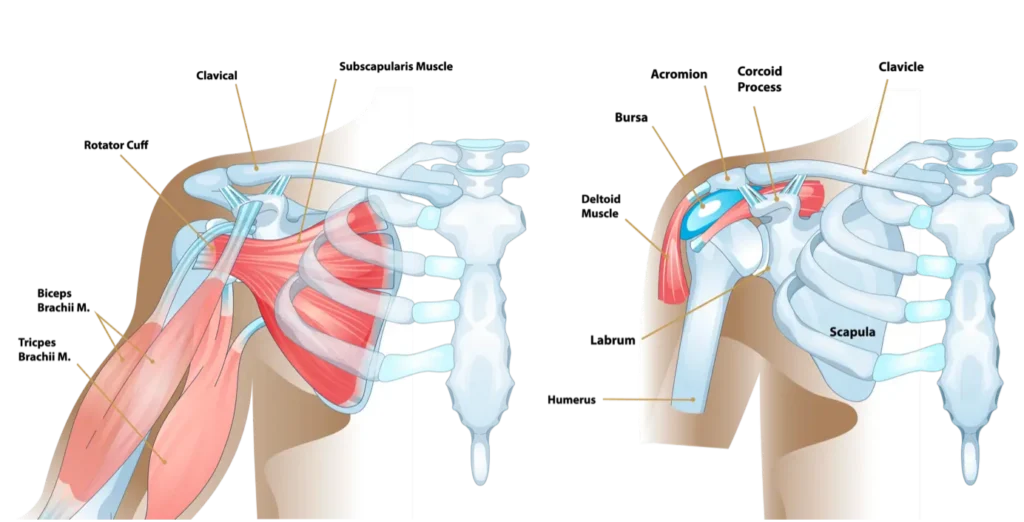
The main shoulder joint is the glenohumeral joint, a classic ball-and-socket structure. The “ball” is the head of the humerus, or upper arm bone, and the “socket” is the glenoid, a shallow depression located in the scapula, or shoulder blade. The shoulder relies heavily on surrounding soft tissues for its stability, including:
- The Rotator Cuff: This group of four muscles and their tendons stabilizes the humerus within the socket and enables smooth rotation and lifting motions.
- The Labrum: This ring of specialized fibrocartilage lines the rim of the glenoid socket, deepening it and providing an attachment point for the joint capsule and ligaments.
- The Joint Capsule and Ligaments: This network of strong connective tissues encloses the joint, providing passive stability to keep the ball centered in the socket.
- The Bursa: These small, fluid-filled sacs reduce friction between the moving parts.
When any of these delicate components become damaged, inflamed, or worn down, the result can be pain and limited function.
Category 1: Tendon and Soft Tissue Causes
Tendon and soft tissue injuries commonly arise from repetitive use, age-related wear, or a sudden, unexpected strain.
Rotator Cuff Tears
A rotator cuff tear occurs when one or more of the four rotator cuff tendons rip, either partially or completely. This condition stands out as a common cause of painful shoulders, with the supraspinatus tendon being the most frequently affected.
Tears can be acute, happening suddenly due to a traumatic event like a fall, or degenerative, developing slowly over time due to chronic wear and tear. As individuals age, the blood supply to the tendons can decrease, and repetitive motions may cause the tendon fibers to fray.
Symptoms that may indicate a rotator cuff tear include:
- A persistent, dull ache felt deep within the shoulder joint.
- Pain when attempting to lift or lower the arm.
- A feeling of weakness when trying to lift the arm against resistance.
- Difficulty sleeping, especially when lying on the injured shoulder.
Shoulder Impingement Syndrome
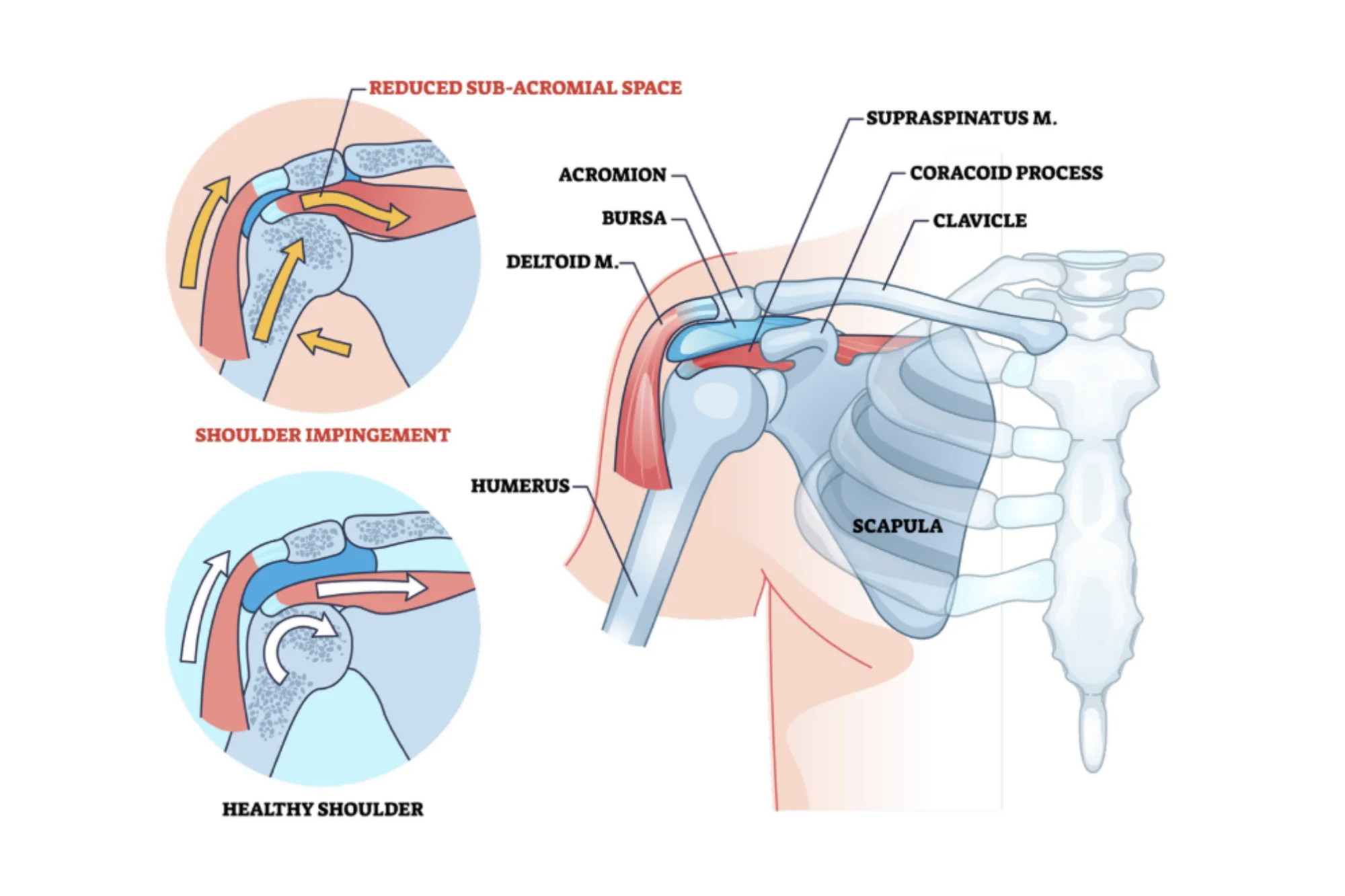
Impingement syndrome is a condition where the rotator cuff tendons and the bursa become painfully pinched in the narrow space beneath the acromion (subacromial space).
When you raise your arm, the space between the acromion and the rotator cuff naturally narrows. If the tendons or bursa are swollen, or if the acromion has developed bone spurs, they can become compressed, or “impinged.” The inflammation of the bursa in this space is called subacromial bursitis. When the bursa swells, it can cause significant pain, particularly with overhead activities. Individuals who perform repetitive overhead activities, such as painters, swimmers, or construction workers, may be more susceptible to developing impingement.
Biceps Tendon Pathologies
Biceps tendinitis involves inflammation of the biceps tendon, typically caused by overuse or as a secondary condition that accompanies other issues like rotator cuff tears or impingement. The pain is usually localized to the front of the shoulder and may travel down the arm.
A complete tear of the long head of the biceps tendon can also occur, usually following a sudden, forceful event. While this can be painful, the most noticeable concern is often the cosmetic deformity, a bulge in the upper arm commonly known as a “Popeye” sign, and a resulting loss of strength in the arm.
Category 2: Joint and Cartilage Causes
When the smooth, protective surfaces of the joint begin to wear down, the resulting friction can become a profound source of chronic, aching shoulder pain. These conditions are generally grouped together under the umbrella of shoulder arthritis.
Glenohumeral Osteoarthritis
Osteoarthritis, sometimes referred to as “wear-and-tear” arthritis, is a form of arthritis affecting the shoulder. It occurs when the smooth articular cartilage covering the ends of the bones, the ball and socket, gradually breaks down and wears away.
As the cartilage erodes, the protective cushioning disappears. The resulting friction can cause pain, inflammation, and the formation of bone spurs, which may further limit the shoulder’s range of motion. The disease is progressive, meaning it tends to worsen over time. Patients often describe a deep, grinding ache in the joint. Stiffness is a common symptom, making it difficult to lift or rotate the arm.
Other Forms of Arthritis
Post-traumatic arthritis is a type of arthritis that develops following a significant shoulder injury, such as a fracture or a severe dislocation, accelerating the breakdown of cartilage years later. Inflammatory arthritis, such as rheumatoid arthritis (RA), can also affect the shoulder joint. RA is an autoimmune disease where the body’s immune system mistakenly attacks the joint lining, causing chronic inflammation that can eventually destroy the articular cartilage and bone. Finally, rotator cuff arthropathy represents a complex form of shoulder arthritis, developing in conjunction with a large, long-standing, and irreparable rotator cuff tear, where the humerus head often migrates upward.
Category 3: Instability and Traumatic Causes
Acute injuries can cause immediate, severe pain, but these traumatic events can also compromise the shoulder’s stability, which may lead to chronic pain and recurrent problems over time.
Shoulder Instability and Dislocation
A shoulder dislocation occurs when the head of the humerus is completely forced out of the glenoid socket. A subluxation, on the other hand, is a partial dislocation where the ball slips out and then spontaneously returns to the socket.
A traumatic dislocation is usually the result of a significant force, such as a fall or a sports collision. The pain is typically excruciating, and the shoulder appears visibly deformed. Once the shoulder dislocates, the ligaments and labrum are often stretched or torn, making the joint inherently less stable. This can lead to chronic shoulder instability, where the shoulder is prone to recurrent dislocations or subluxations with minimal force.
Labral Tears
The labrum, the cartilage rim around the socket, can tear in several ways, leading to pain and instability.
Bankart Lesion: This tear occurs in the lower front part of the labrum, often when the shoulder dislocates forward. The torn labrum may prevent the shoulder from seating securely.
SLAP Tear (Superior Labrum Anterior to Posterior): This tear affects the top part of the labrum, right where the long head of the biceps tendon attaches. SLAP tears are common in overhead athletes due to repetitive stress, or they can result from a fall onto an outstretched arm. Patients frequently report a deep, aching pain, a clicking or popping sensation, and difficulty with overhead activities.
Shoulder Fractures
A fracture, or broken bone, in the shoulder complex is an acute cause of severe pain. The three main bones that can fracture are the proximal humerus (upper arm bone), the clavicle (collarbone), and the scapula (shoulder blade). Proximal humerus fractures are common in older adults with osteoporosis, while clavicle fractures often result from a fall or direct blow. Scapula fractures are rare and usually result from high-energy trauma. Treatment for shoulder fractures depends heavily on the location and whether the bone fragments are displaced.
Category 4: Other Common Causes of Pain
Adhesive Capsulitis (Frozen Shoulder)
Frozen shoulder is a condition where the joint capsule thickens, tightens, and severely restricts movement. It typically progresses through three stages: the freezing stage (increasing pain and loss of motion), the frozen stage (severe stiffness with decreasing pain), and the thawing stage (slow return of motion). The pain can be intense, especially during the freezing stage.
Calcific Tendinitis
This condition involves the formation of calcium deposits within the rotator cuff tendons. The most severe pain often occurs when the body attempts to reabsorb the calcium, which triggers an intense inflammatory response.
Referred Pain
In some cases, the pain you feel in your shoulder does not actually originate there. Pain can be “referred” from other areas, most notably the neck (cervical spine). A thorough physical examination may be essential to distinguish between true shoulder pathology and referred pain from elsewhere in the body.
Diagnosis and Treatment
Given the multitude of structures in the shoulder and the variety of conditions that can cause pain, an accurate diagnosis can be important. Diagnosis typically involves the following steps:
- Detailed History and Physical Examination: The doctor may ask detailed questions about the nature of the pain and perform specific physical tests designed to isolate the injured structures.
- Imaging Studies: X-rays visualize bone structures and signs of arthritis. MRI (Magnetic Resonance Imaging) provides detailed pictures of soft tissues, including the rotator cuff tendons, labrum, and ligaments. CT scans may be used for a more detailed look at the bone structure, particularly when planning for complex surgeries.
Once a diagnosis is established, a tailored treatment plan can begin. An experienced shoulder specialist can help evaluate the condition and guide a personalized treatment plan for you. Many shoulder conditions are initially treated non-surgically, with surgery considered for severe injuries or when non-surgical treatments fail to provide adequate relief.
Summary
Shoulder pain can arise from many different sources, including acute injuries, gradual wear over time, or inflammatory conditions affecting the joint and surrounding tissues. Because the shoulder is a complex structure with many interconnected components, symptoms from different conditions often overlap. A thorough medical assessment can be important for identifying the underlying issue and determining an appropriate treatment approach.
Frequently Asked Questions
How long should I wait before seeing a doctor for shoulder pain?
If you experience sudden, severe pain, significant weakness, or an obvious deformity after an injury, consider seeing a doctor immediately. For chronic pain that does not improve after a few weeks of rest, ice, and over-the-counter pain relievers, or if the pain is interfering with your sleep and daily activities, it is generally recommended to schedule an appointment with a shoulder specialist.
Does physical therapy always help shoulder pain?
Physical therapy is usually a part of treatment for many shoulder conditions, including impingement, tendinitis, and post-operative recovery. It can be highly effective in strengthening the rotator cuff, improving shoulder mechanics, and restoring range of motion.
Can poor posture contribute to shoulder pain?
Yes, poor posture may contribute to shoulder pain. Slouching or maintaining a rounded shoulder posture can narrow the subacromial space, which increases the risk of impingement syndrome and places undue stress on the rotator cuff tendons. Maintaining good posture helps keep the shoulder blade in the correct position, allowing the shoulder joint to move efficiently and reducing the risk of injury over time.