

For individuals experiencing persistent shoulder pain and limited mobility, the prospect of shoulder replacement surgery can be both daunting and hopeful. But how common is it, what does it entail, and who is a candidate? In this post, we will explore the prevalence of these procedures, the conditions they address, the different types available, and what to expect during recovery.
Key Takeaways
- Shoulder replacement surgeries are becoming increasingly common, driven by technological advancements and successful outcomes.
- The most frequent reasons for shoulder replacement include severe osteoarthritis, rheumatoid arthritis, post-traumatic arthritis, and some irreparable rotator cuff tears.
- The main types are anatomic total shoulder replacement (replacing both ball and socket to match natural anatomy) and reverse total shoulder replacement (reversing the ball and socket positions, often for complex cases like severe rotator cuff deficiency).
- The majority of shoulder replacement patients experience dramatic pain relief, improved range of motion, and a return to many daily activities.
- Recently, Dr. Costouros was one of the first surgeons in the USA to introduce robotic-assisted reverse total shoulder replacement
Understanding Shoulder Anatomy: The Foundation of Movement
The shoulder allows for the widest range of motion of any joint in the body. This mobility, however, comes at the cost of inherent instability, making it susceptible to various injuries and degenerative conditions.
The joint is primarily formed by three bones: the humerus (the long bone of the upper arm), the scapula (shoulder blade), and the clavicle (collarbone). At the core of this joint is a classic ball-and-socket configuration. The ‘ball’ is the rounded head of the humerus, and the ‘socket’ is a shallow, cup-shaped depression on the scapula called the glenoid. This design facilitates multi-directional movement, including flexion, extension, abduction, adduction, and rotation.
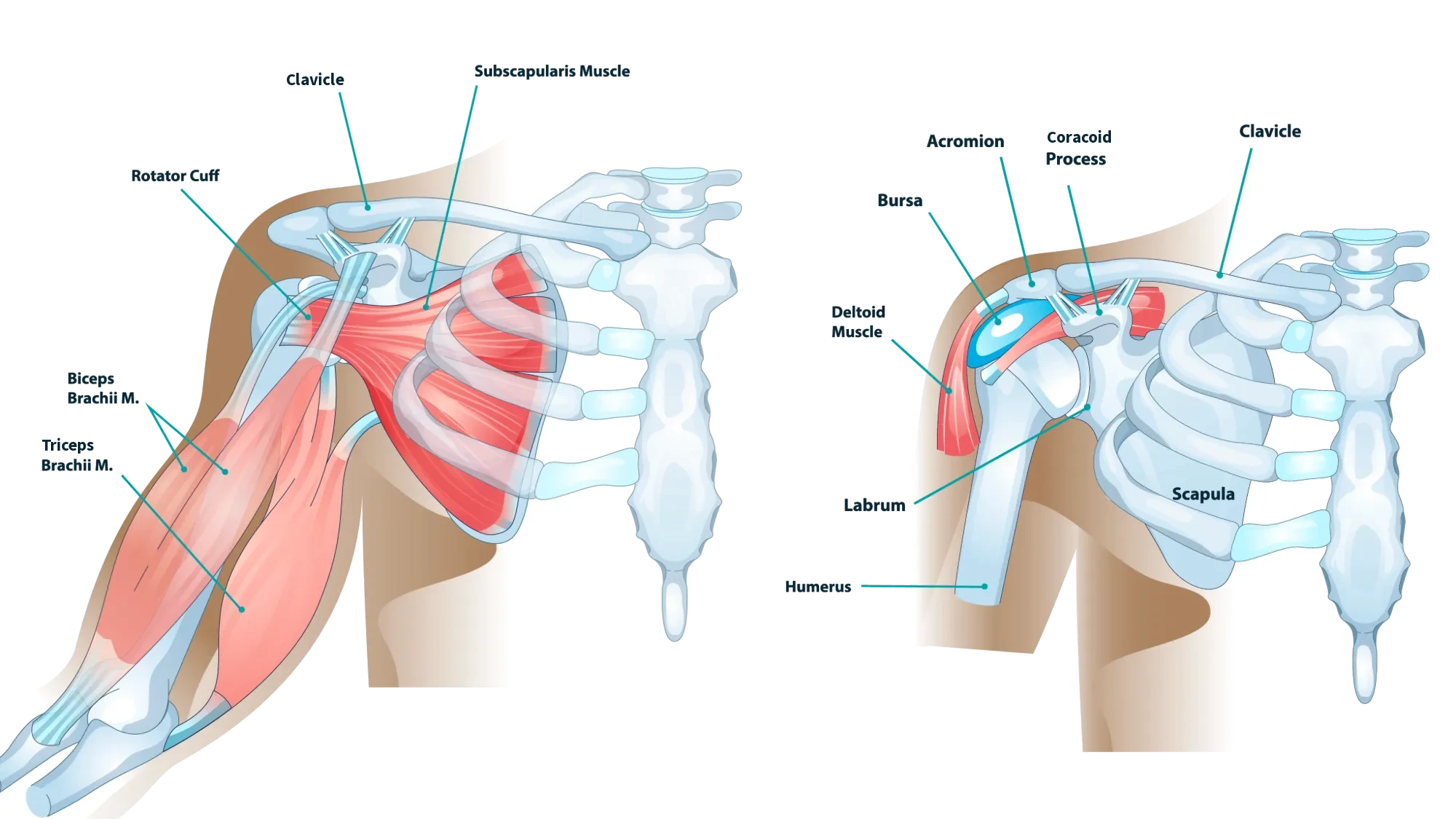
Both the humeral head and the glenoid are covered with a smooth, slippery tissue known as articular cartilage. This specialized cartilage serves a key function: it reduces friction between the bones, allowing for smooth movement. Damage or degeneration of this cartilage is a primary driver of shoulder pain and dysfunction, often leading to the consideration of surgical interventions like shoulder replacement.
Further stabilizing and enabling the movement of this highly mobile joint is a complex network of soft tissues. The rotator cuff, a group of four muscles and their tendons, encapsulates the shoulder joint. These tendons not only provide stability but are also instrumental in initiating and controlling shoulder motion.
Understanding these anatomical components is helpful for knowing why shoulder replacement surgery may become necessary. When any of these elements are compromised, the delicate balance of the shoulder joint is disrupted, often leading to pain, stiffness, and a significant reduction in quality of life. The goal of shoulder replacement is to restore this balance, replacing damaged components with artificial implants with the goal of alleviating pain and improving function.
When is Shoulder Replacement Surgery Recommended?
Shoulder joint replacement is the fastest growing segment of joint replacement over the past twenty years. While shoulder replacement is less common than hip or knee replacement, it is a routine orthopedic procedure performed in high volumes across the United States. Shoulder replacement surgery is typically considered when conservative, non-surgical treatments have failed to provide adequate relief from severe pain and functional limitations. The decision to undergo surgery is a collaborative one between the patient and an experienced orthopedic surgeon, based on a thorough evaluation of the patient’s condition, lifestyle, and expectations.
Arthritis is the most common reason for shoulder replacement surgery. It involves the breakdown of the smooth articular cartilage that cushions the ends of the bones in the joint. As this cartilage wears away, bones rub directly against each other, leading to pain, stiffness, and loss of motion. There are several forms of arthritis that can affect the shoulder:
- Osteoarthritis (Degenerative Joint Disease): This is the most prevalent type of arthritis, often referred to as ‘wear-and-tear’ arthritis. It develops gradually over time.
- Rheumatoid Arthritis: An autoimmune disease where the body’s immune system mistakenly attacks its own tissues, including the articular cartilage and synovial lining of the joints.
- Post-Traumatic Arthritis: This type of arthritis develops after a significant injury to the shoulder, such as a fracture or dislocation.
- Rotator Cuff Tear Arthropathy: A complex form of arthritis that occurs when a large, long-standing rotator cuff tear is combined with advanced arthritis.
Other possible indications, depending on severity, include rotator cuff tears, complex shoulder fractures, chronic instability, and avascular necrosis. Persistent pain that interferes with daily activities, sleep, and overall quality of life is often a key factor in the decision-making process for all these conditions.
Types of Shoulder Replacement Surgery: Tailored Solutions for Individual Needs
Modern shoulder replacement surgery offers several distinct approaches, each designed to address specific pathologies and patient needs. The choice of procedure depends on factors such as the extent of joint damage, the integrity of the rotator cuff, the patient’s age, activity level, and overall health.
Anatomic Total Shoulder Replacement
Total shoulder replacement, also known as total shoulder arthroplasty, is the traditional form of shoulder replacement. This procedure aims to replicate the natural anatomy of the shoulder joint as closely as possible. During total shoulder replacement, both the ‘ball’ (the head of the humerus) and the ‘socket’ (the glenoid) are replaced with prosthetic components.
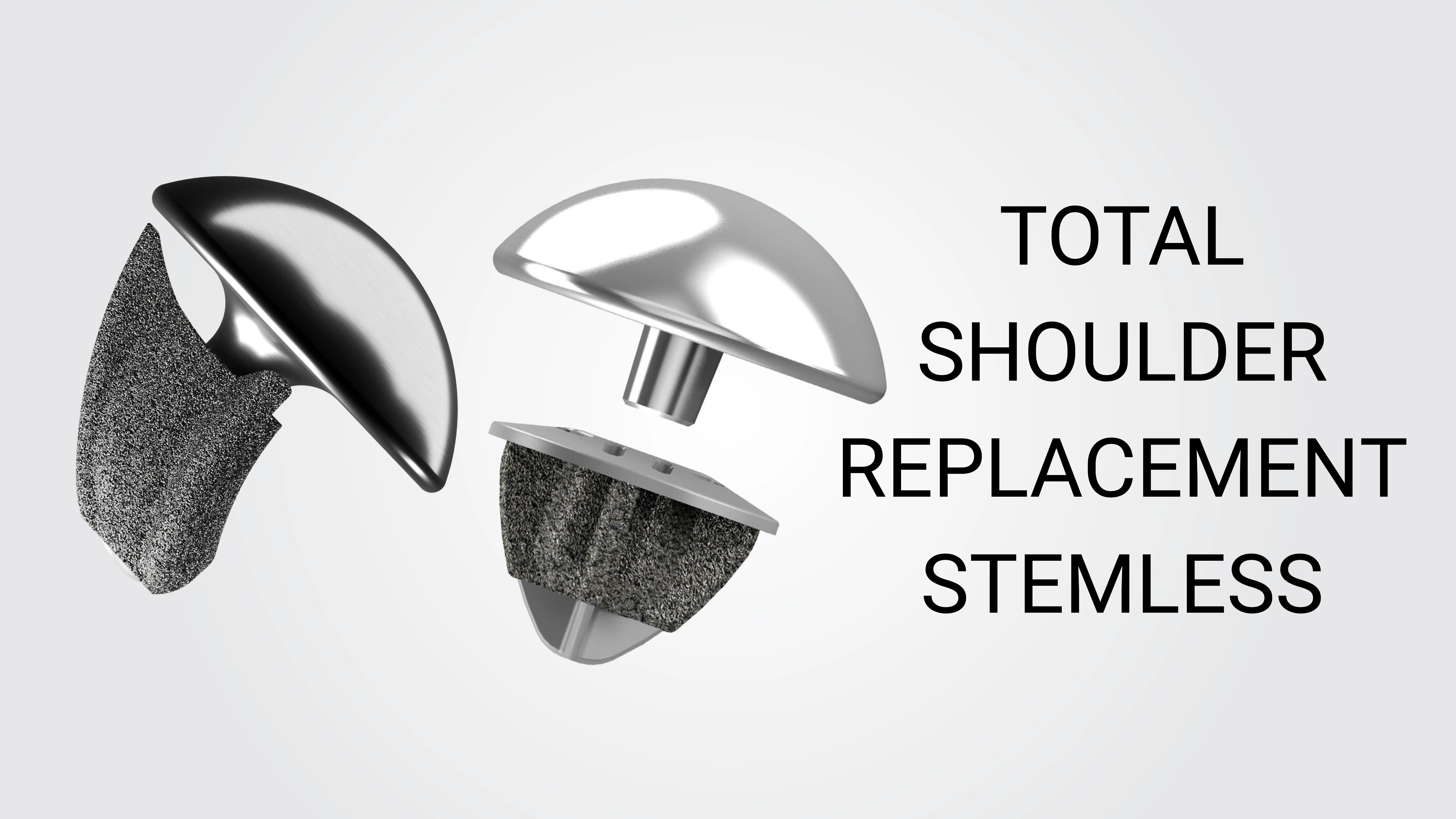
Total shoulder replacement may be recommended for patients with severe shoulder arthritis where the rotator cuff is intact and functioning well. A healthy rotator cuff is often necessary for the success of an anatomic replacement, as these tendons are responsible for controlling the movement and stability of the new prosthetic joint. The goal is to relieve pain, restore smooth joint motion, and improve overall shoulder function, allowing patients to return to many of their daily activities and an active lifestyle.
Reverse Total Shoulder Replacement
Reverse total shoulder replacement is a more recent innovation that has revolutionized the treatment of complex shoulder conditions. As its name suggests, reverse shoulder replacement reverses the natural ball-and-socket configuration of the shoulder. In this procedure, a metal ball is fixed to the scapula where the natural socket (glenoid) once was, and a plastic socket is attached to the top of the humerus.

This design changes the biomechanics of the shoulder. By moving the center of rotation, the deltoid muscle, which is the large muscle covering the shoulder, becomes the primary muscle responsible for lifting and rotating the arm. This makes this procedure a potential solution for patients who have rotator cuff tear arthropathy, irreparable rotator cuff tears, or complex shoulder fractures.
The Benefits of Shoulder Replacement Surgery
For many individuals, shoulder replacement surgery offers a pathway to an improved quality of life. The primary goals of these procedures are consistent across types: to alleviate pain, restore mobility, and enable a return to meaningful daily activities.
Chronic shoulder pain can be relentless, interfering with sleep, work, and virtually every aspect of daily living. One of the most impactful possible benefits of a successful shoulder replacement is the dramatic reduction of this pain. Beyond pain relief, shoulder replacement surgery is designed to help restore the shoulder’s mechanics, leading to improvements in range of motion. Patients often find they can once again lift their arm, reach overhead, and perform rotational movements that were previously impossible or severely restricted.
The ultimate aim of shoulder replacement is to enable patients to return to the activities they enjoy and need to perform. For many, this means resuming hobbies, sports, and social engagements that had been abandoned due to pain and limited function. Whether it’s playing golf or tennis, gardening, swimming, or simply being able to carry groceries, the restoration of function can allow individuals to reclaim their active lifestyles.
Recovery and Rehabilitation After Shoulder Replacement Surgery
A dedicated and structured recovery and rehabilitation program is important to achieving the best possible long-term outcomes. This process typically unfolds in several phases, each with specific goals and milestones.
Immediate Post-Operative Period
Immediately following surgery, the focus is on pain management, protecting the healing tissues, and initiating gentle motion. Patients will typically experience some pain and swelling, which may be managed with medication. The arm may be placed in a sling, often for several weeks, to immobilize the shoulder and allow the soft tissues to heal.
During this phase, physical therapy usually begins with passive range-of-motion exercises, where the therapist moves the arm without the patient’s muscle engagement. The goal is to prevent stiffness and maintain joint mobility without stressing the surgical repair.
Early Rehabilitation
As healing progresses, the rehabilitation program advances. Active-assisted range-of-motion exercises are introduced, where the patient begins to use their own muscles to move the arm, often with assistance from the therapist or the other hand. The intensity and complexity of exercises increase, focusing on restoring a greater range of motion and improving muscle control. The therapist will guide the patient through exercises designed to strengthen the muscles around the shoulder, always respecting pain limits and surgical precautions.
Advanced Rehabilitation
This phase marks a transition towards more aggressive strengthening and functional training. The goal is to build muscle strength, endurance, and coordination. Patients may engage in exercises that mimic daily activities and prepare them for a return to more demanding tasks. Strengthening exercises become a primary focus, gradually increasing resistance and complexity.
Long-Term Recovery
Full recovery from shoulder replacement surgery can take anywhere from six months to a full year, and sometimes even longer, depending on the individual, the type of surgery, and adherence to the rehabilitation program. Patients may be advised to avoid high-impact activities or heavy lifting to protect the prosthetic joint.
Summary
Shoulder replacement surgery has evolved into an increasingly common orthopedic procedure, offering dramatic pain relief and improved function for many individuals suffering from debilitating shoulder conditions. Whether it’s an anatomic total shoulder replacement for arthritis with an intact rotator cuff or a reverse total shoulder replacement for complex cases involving rotator cuff deficiency and some fractures, the goal remains the same: to alleviate pain, restore mobility, and enable patients to return to their daily activities and active lifestyles.
Frequently Asked Questions
What is the difference between total shoulder replacement and reverse shoulder replacement?
In a total shoulder replacement (anatomic), the damaged ball (humeral head) and socket (glenoid) are replaced with prosthetic components that mimic the natural anatomy. This is typically done when the rotator cuff is intact. In a reverse shoulder replacement, the ball and socket positions are reversed: a ball is placed on the shoulder blade, and a socket is placed on the humerus. This design allows the deltoid muscle to power arm movement, making it more suitable for patients with irreparable rotator cuff tears or complex fractures.
Will I be able to return to all my previous activities after shoulder replacement?
Most patients experience significant pain relief and improved range of motion, allowing them to return to many daily activities and moderate recreational sports like swimming, golf, and gardening. However, high-impact activities, heavy weight training, and contact sports are generally discouraged to protect the longevity of the implant. Your surgeon and physical therapist will provide specific guidance based on your individual recovery and the type of implant.
How painful is shoulder replacement surgery and recovery?
Pain management is a key focus during and after shoulder replacement surgery. While some pain and discomfort are expected, modern pain control techniques, including nerve blocks and medication, are typically highly effective in keeping patients comfortable. Dr. Costouros has developed and published many current methods to minimize pain following shoulder surgery. The pain often subsides in the weeks following surgery, and it is managed throughout the rehabilitation process.
What are the alternatives to shoulder replacement surgery?
For some conditions, before considering surgery, orthopedic specialists typically recommend a range of conservative treatments. These can include physical therapy, anti-inflammatory medications (NSAIDs), corticosteroid injections, activity modification, and rest. In some cases, arthroscopic procedures may be an option to address specific issues without a full joint replacement.