
Medically reviewed by John Costouros, MD
The biceps is the muscle most people picture when they think of arm strength. The biceps complex is actually composed of many muscles and tendons. One of these tendons runs up the front of the shoulder and anchors directly into the labrum inside the joint. This is called the long head of the biceps. When that tendon becomes torn, frayed, or chronically inflamed, it can cause a deep, nagging ache in the front of the shoulder. Therapy and injections are generally less effective for long term relief. Biceps tenodesis is the surgery I perform to take that painful tendon out of the equation. This surgical procedure moves the tendon’s attachment out of the shoulder joint and secures it lower on the arm bone. This is an effective solution to pain in the front of the shoulder derived from long head biceps pathology while maintaining and restoring normal shoulder function and strength.
Key Takeaways
- The long head of the biceps tendon attaches inside the shoulder joint, and it’s a common and often overlooked source of pain in the front of the shoulder.
- Biceps tenodesis detaches the tendon from its anchor on the labrum and reattaches it lower on the upper arm bone, relieving tension on the damaged area.
- The procedure is commonly performed at the same time as a rotator cuff repair or other procedures during shoulder surgery.
The Biceps Tendon Inside the Shoulder
The biceps has two tendons at the shoulder, a short head and a long head. The long head is the one that can cause pain at the front of the shoulder. It travels up a groove at the front of the arm bone and enters the shoulder joint. There, it anchors into the top of the labrum, the ring of fibrocartilage that lines the socket.
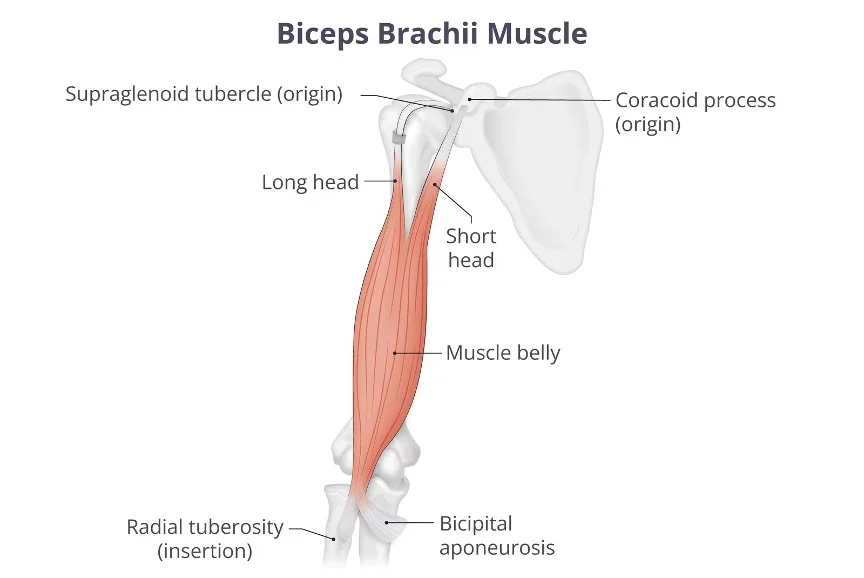
That path makes the tendon vulnerable to injury as it turns sharply as it enters the joint. It’s also pulled on every time you lift, carry, rotate, or throw. Over time, it can fray, thicken, partially tear, or slip out of its groove. Where it anchors into the labrum, a hard fall or repetitive throwing can pull the anchor away from the bone, an injury called a SLAP tear.
Symptoms of a Biceps Tendon Problem
The usual symptom is pain in the front of the shoulder, sometimes traveling down toward the upper arm. It tends to worsen with lifting, reaching overhead, or carrying something with the elbow bent.
Night pain can occur as well. Biceps tendinopathy is one of the conditions that can cause shoulder pain when sleeping, particularly when lying on the affected side.
A clicking or catching sensation can point toward a SLAP tear or a tendon that’s slipping out of its groove. In throwing athletes, loss of velocity or pain during the late phase of throwing can be an early sign.
How I Diagnose a Biceps Problem
The diagnosis starts with a careful exam. Pressing along the biceps groove at the front of the shoulder and testing the tendon against resistance can reproduce the pain. There are a variety of specific tests that a shoulder specialist may perform to assist in the diagnosis of long head biceps tendon pathology. I also examine the rotator cuff and labrum closely, because biceps problems rarely exist in isolation.
An MRI, or in some cases an MRI arthrogram, can show tendon thickening, partial tearing, or a SLAP tear. That said, imaging doesn’t always capture how irritated the tendon is. A diagnostic injection can help. If numbing medicine placed around the tendon relieves most of the pain, that’s strong evidence the biceps is a major contributor.
Nonsurgical Treatment Comes First
Most biceps tendon pain is treated without surgery at the start. Rest from aggravating activities, anti-inflammatory medication, physical therapy focused on shoulder mechanics and rotator cuff strength, and a targeted steroid injection can calm many irritated biceps tendon issues.
Surgery becomes a reasonable option when pain persists after a solid trial of that care, when the tendon is significantly torn or unstable, or when the biceps is contributing to a problem that already needs surgery, such as a rotator cuff tear.
What Happens During Biceps Tenodesis
Biceps tenodesis detaches the long head of the biceps tendon from the torn or irritated labral anchor and reattaches it lower on the humerus. Removing the tendon from the joint relieves tension on the damaged area and stops the tendon from rubbing or catching. The muscle itself stays attached and continues to work at the elbow.
The procedure is usually performed with arthroscopic assistance. The new attachment point may be near the top of the biceps groove. In other cases, it sits a little lower on the arm, reached through a small incision. The tendon is secured to bone with an anchor in these cases.
Why Tenodesis May Be Chosen Over SLAP Repair
I published a treatment-based algorithm for type II SLAP tears, which outlines when a SLAP repair makes sense and when biceps tenodesis is the better option.
For years, the standard treatment for a SLAP tear was to repair the labrum and biceps anchor back to the socket. After years of study, it was determined that this approach led to stiffness in some patients when compared to biceps tenodesis. Today, SLAP repair is less commonly performed than biceps tenodesis. The recovery after tenodesis is faster. In many cases, the biceps tendon also has damage of its own that a labral repair wouldn’t address.
I still consider SLAP repair for select young overhead athletes, where preserving the native anatomy may matter. For a large share of my patients with a SLAP tear, though, tenodesis offers a more predictable path back to activity. Many overhead athletes do return to throwing after either procedure. The timeline depends on the extent of the tear, the surgical approach, and the quality of rehabilitation.
What I See in My Patients
Across my Menlo Park and Fremont offices, biceps tenodesis patients tend to fall into three groups.
The first is the patient in their fifties or sixties having a rotator cuff tear repaired. When I look inside the shoulder, the biceps tendon is frequently frayed, partially torn, or sliding out of its groove. Addressing it during the same operation can spare that patient from a lingering source of pain after the cuff heals. However, the decision to treat the biceps or not is carefully assessed prior to surgery during clinical examination.
The second is the Bay Area athlete with a SLAP tear: a tennis player, a softball or baseball player, a swimmer, or a weekend warrior who fell on an outstretched arm. Many of these patients have been through months of therapy for pain that never quite resolved.
The third is the person with isolated, stubborn biceps tendinopathy that hasn’t responded to therapy and injections. These patients often point to the exact same spot on the front of the shoulder every visit.
My Approach to Biceps Tenodesis
I’ve devoted my entire career to the shoulder, and as a former full-time member of the Stanford orthopedic faculty and overhead athlete myself, I’ve trained hundreds of surgeons from around the world. I don’t recommend biceps tenodesis because a tendon looks abnormal on an MRI without clinical symptoms. I recommend it when the exam, the imaging, and the symptoms all point to the biceps as the source of pain and when nonsurgical care has failed. My goal with every biceps tenodesis is the elimination of pain and restoration of normal function, allowing the patient to get back to lifting, sport, and work normally.
Recovery After Biceps Tenodesis
When biceps tenodesis is performed on its own, recovery is generally faster than after a labral or rotator cuff repair. Most patients go home the same day. A sling is used for comfort and protection in the first few weeks. Range of motion of the shoulder and elbow begins early. Resisted elbow bending and heavy lifting are avoided for four weeks so the tendon can heal to bone. Strengthening typically follows in the second to third month, with a gradual return to full activity after that.
When tenodesis is combined with a rotator cuff repair or a stabilization procedure, the recovery follows the protocol for that larger repair. In those cases, the sling schedule and motion restrictions are set by what the rotator cuff or labrum needs, not by the biceps. My rotator cuff surgery recovery post outlines that longer timeline.
Summary
This post covered the long head of the biceps tendon, why it causes pain, and how I confirm the diagnosis. It also walked through when nonsurgical care makes sense, what happens during biceps tenodesis, and why it may be chosen over SLAP repair for many patients. Recovery depends on whether the tenodesis is done alone or alongside a larger repair.
Maybe you’ve been living with pain in the front of your shoulder that therapy and injections haven’t resolved. If so, request an appointment at my Menlo Park or Fremont office. Bring an MRI of the shoulder that you’ve had. A focused exam, and sometimes a diagnostic injection, can tell us whether the biceps is the source of your pain and whether biceps tenodesis makes sense for your shoulder.
Frequently Asked Questions
What is biceps tenodesis?
Biceps tenodesis detaches the long head of the biceps tendon from its anchor inside the shoulder. It then reattaches the tendon lower on the upper arm bone. Moving the tendon out of the joint relieves tension on the damaged area and can reduce pain in the front of the shoulder while maintaining function.
How long is recovery after biceps tenodesis?
When the procedure is done on its own, patients typically use a sling for the first few weeks. Heavy lifting and resisted elbow bending are avoided for four weeks, and strengthening begins in the second to third month. When it’s combined with a rotator cuff repair or stabilization, recovery follows the longer protocol for that repair.
Will I lose strength in my arm after biceps tenodesis?
No. Patients keep functional strength for daily life, work, and sport, because the muscle stays attached and continues to work at the elbow. Tenodesis is designed to preserve the muscle’s normal length, which helps limit cramping and changes in the arm’s appearance.